Safe anti-slip flooring for wet production areas is not merely a search for a sheet. In projects such as food plants, wash bays, production halls, treatment plants, technical pool areas, walkways, the facing becomes part of the component: it influences weight, cleaning or weather resistance, appearance, bonding and maintenance over the service life.
DEEP APPLICATION GUIDE
Safe anti-slip flooring for wet production areas
If you are asking “how to reduce slip risk in a wet production area?”, start with the outcome rather than a material name. This guide translates a durable anti-slip surface matched to actual contaminants into verifiable selection criteria, documents and a product shortlist.
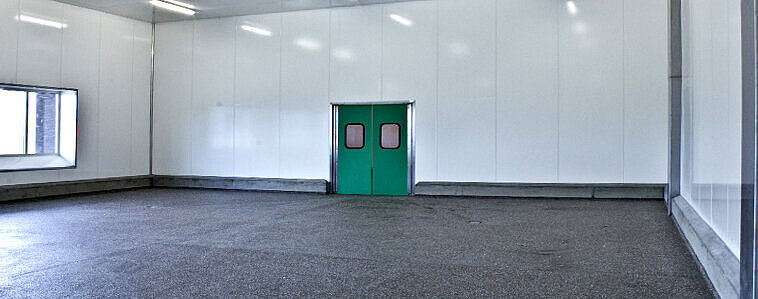
INVESTMENT OUTCOMEProduction and wet areasfood plantswash bays
WHO THIS GUIDE IS FOR
A material decision aligned with the role and process.
For designers, procurement teams and production engineers responsible for production and wet areas. The page organises requirements before quotation, variant selection or sample validation.
It is also a working brief for architects, contractors, facility managers and investors who must compare a modern composite with a conventional facing, define acceptance criteria and obtain a repeatable result across the complete series.
DESIGNERINVESTORCONTRACTORTECHNICAL PROCUREMENT
DEVELOPING THE TOPIC
A modern material approach to production and wet areas
The right modern material is not the one with the longest feature list. It is the one whose surface, reinforcement, format and documentation match the actual application.
LAMILUX Anti Slip is considered here because wear-resistant anti-slip GRP surface for floors, ramps and steps in wet or intensively used environments. For this application, the practical objective is a durable anti-slip surface matched to actual contaminants; the material therefore has to be assessed together with joints, substrate, adhesive, edges and the operating environment.
The project should move from a user need to a verified variant. Existing product data provide a starting range (technical range: R11–R13, thickness: 1,2–2,1 mm, width: do 3,0 m), while the project value comes from such characteristics as low weight, corrosion resistance and a project-specific surface. These values still need confirmation for the selected thickness, surface and finished assembly.
MATERIAL DIRECTION COMPARISON
LAMILUX Anti Slip compared with conventional materials for production and wet areas
This is a directional comparison for food plants, wash bays, production halls. It identifies where a modern composite may simplify the component and which assumptions still need project verification.
CRITERIONCONVENTIONAL MATERIALMODERN COMPOSITEPROJECT BENEFIT
01 / CRITERION
Number of layers
CONVENTIONAL MATERIAL
Plywood, coatings, coverings and separate anti-slip treatments create a multilayer floor.
MODERN COMPOSITE
A composite floor system can combine carrier, moisture resistance and finished functional surface.
PROJECT BENEFITFewer interfaces to process and protect.
02 / CRITERION
Moisture
CONVENTIONAL MATERIAL
Wood-based cores and damaged coatings require careful edge sealing and moisture control.
MODERN COMPOSITE
GRP itself has low water absorption and does not corrode.
PROJECT BENEFITLower sensitivity of the facing to wet operation.
03 / CRITERION
Weight
CONVENTIONAL MATERIAL
Steel plates or thick multilayer floors can consume payload in mobile structures.
MODERN COMPOSITE
A lightweight composite build-up is selected against the actual loads and support spacing.
PROJECT BENEFITMore room for payload or equipment after structural verification.
04 / CRITERION
Grip and cleaning
CONVENTIONAL MATERIAL
Applied grit or generic tread plate may not match contaminants and cleaning methods.
MODERN COMPOSITE
Anti-slip grade and surface are selected for traffic, contamination and sanitation.
PROJECT BENEFITGrip can be specified together with cleanability and wear.
THE FULL TOPIC SCOPE
Where can this solution create value?
The scope is broader than one catalogue category. food plants, wash bays, production halls, treatment plants, technical pool areas, walkways are distinct investment contexts with different loads, appearance, cleaning and documentation needs.
01food plants02wash bays03production halls04treatment plants05technical pool areas06walkways
What must work in the real component?
Projects such as food plants, wash bays, production halls, treatment plants cannot be solved by choosing an isolated sheet. Loads, moisture, cleaning, bonding, appearance, joints and repeatability must be assessed as one component.
Why this material direction?
A modern LAMILUX Anti Slip composite opens a lighter, corrosion-resistant and application-specific route because wear-resistant anti-slip grp surface for floors, ramps and steps in wet or intensively used environments. The exact surface, reinforcement, format and documentation are then confirmed for the real process.
ANSWERS FOR INVESTORS
Concrete guidance before material selection.
Questions that arise before specification, budgeting and the request for quotation.
How do I start a project for production and wet areas?
Define the operating environment, cleaning or weather exposure, loads, joint strategy, expected life and the documents the investor or authority will require.
What should be written into the material specification?
State the functional outcome, surface and reverse-side finish, thickness and format, installation or bonding method, test evidence and acceptance method. Avoid specifying only a trade name.
Does one test report prove compliance of the whole application?
No. A test result concerns its stated specimen and method. Compliance of the finished component or room depends on the exact variant, joints, installation, operation and applicable project rules.
When should samples be tested?
Before series ordering, in the intended adhesive, cleaning chemistry, temperature range and representative component geometry.
SELECTION CRITERIA
Five areas to verify before a quotation.
These inputs reduce the risk of selecting a material from a name or one isolated parameter.
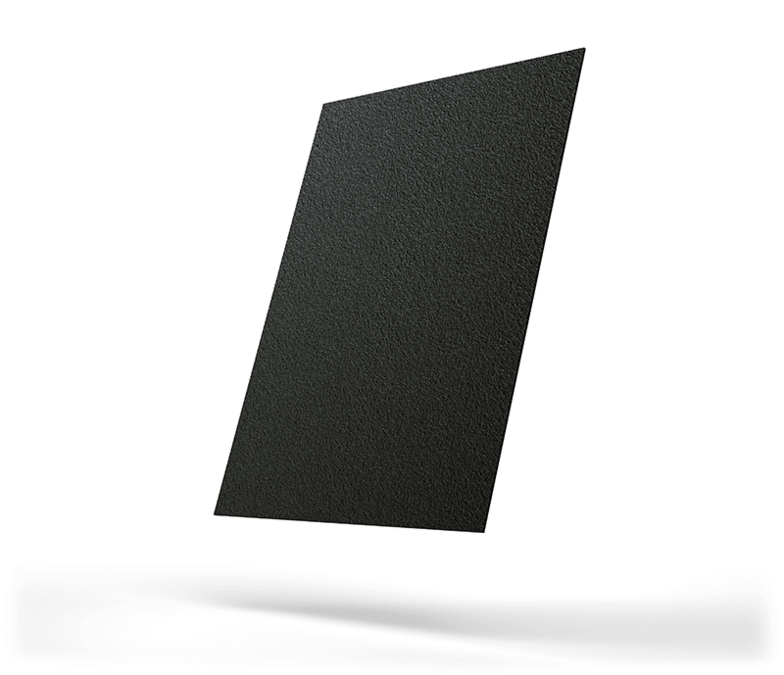
RECOMMENDED STARTING POINT
LAMILUX Anti Slip
Wear-resistant anti-slip GRP surface for floors, ramps and steps in wet or intensively used environments.
R11–R131,2–2,1 mmdo 3,0 m
- surface tailored to the operating environment
- format and reverse side selected for processing
- low weight and corrosion resistance
- sample validation before series supply
STANDARDS, TESTS AND DOCUMENTS
What actually demonstrates compliance?
A composite materialGRP (Glass Reinforced Plastic) is a glass-fibre reinforced composite engineered for low weight, corrosion resistance and specific loads. is one part of a system. Requirements must be checked against the exact variant, finished component and acceptance conditions.
VARIANT DOCUMENTATION
Request the current technical data, declared performance, test reports and—where the application requires it—fire, food-contact, chemical-resistance or slip-resistance evidence for the exact thickness, surface and assembly.
ALTERNATIVES AND COMPLEMENTS
Products worth comparing.
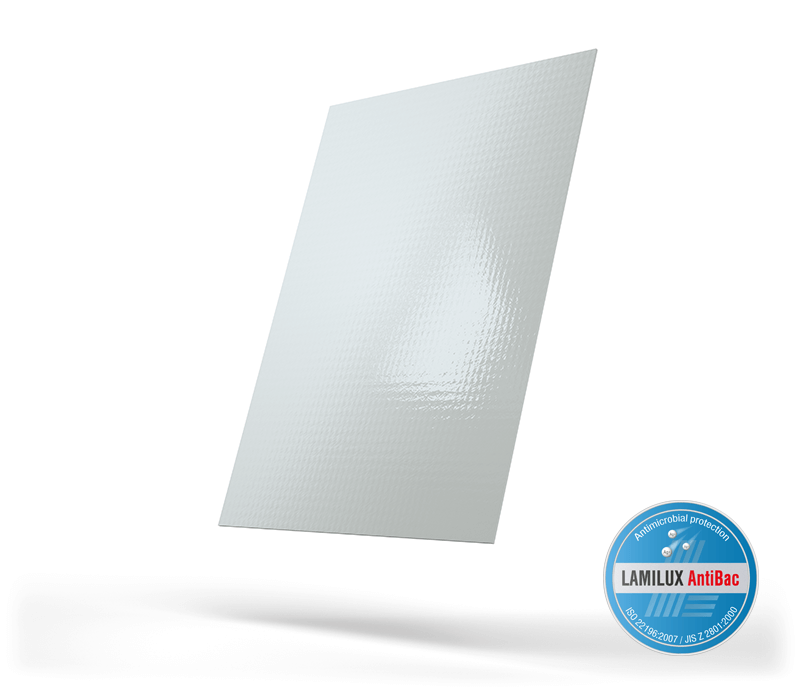
FROM REQUIREMENT TO SUPPLY
Move from the application to a validated variant.
Describe the component and environment
Collect technical data and operating conditions.
Shortlist material families
Compare surface, reinforcement, resin and format.
Validate a sample in the process
Check bonding, appearance and performance in the real component.
Confirm format, variant and supply
Agree parameters, quantities, timing and repeat supply.
QUESTIONS BEFORE SELECTION
Frequent technical questions.
01Is LAMILUX Anti Slip suitable for production and wet areas?+
It is a recommended starting point. Final suitability depends on loads, environment, bonding, cleaning and applicable standards.
02Which information is needed for selection?+
Provide dimensions, quantity, operating environment, expected loads, processing method and surface requirements.
03Can I request a sample and a project-specific variant?+
Yes. The enquiry path is designed to confirm the material family, surface, format and sample before series supply.
THE SAME MATERIAL, OTHER CHALLENGES
More applications for LAMILUX Anti Slip.
ENQUIRY FOR: PRODUCTION AND WET AREAS
Turn requirements into a sample and quotation.
The form identifies the product and application. Add dimensions, quantity, environment and downstream processing.